Samurai Name Generator
The main tool: twelve styles from classic samurai to gamer tags, with kanji, meanings and a personal name option.
Houses and factions
Find a name for a warrior house in your story, game or campaign. Pick real historical clans, believable fictional ones built like Japanese family names, or dramatic fantasy houses, each with kanji, a reading and the meaning of its characters.
Choose what kind of house you need, pick a theme and generate. Historical results are marked so you always know which clans really existed.
1Choose a clan type
2Tune your batch
Choose your options and press Generate Clan Names to see your first batch.
Tap Save on any result to keep it here. Favorites stay on this device.
A samurai clan name is the name of a warrior house: the family a samurai belonged to, served or led. In Japanese it comes before the personal name, so Takeda Shingen was Shingen of the Takeda.
Japan actually used two layers of family name. The oldest were lineage names, or uji, such as Minamoto, Taira and Fujiwara, linked to a personal name with the particle no, as in Minamoto no Yoritomo. As these lineages branched out, each branch took a myoji, usually the name of the estate or village it held. Ashikaga, Takeda and Tokugawa are myoji. A clan name in the everyday sense, the one you see in war chronicles and on castle signs, is almost always a myoji.
That is why so many clan names describe land. 田 (rice field), 川 (river), 山 (mountain) and 島 (island) appear again and again, and the generator builds its historical-inspired names from the same kind of vocabulary.
The generator keeps three lists apart and labels every result, because a name that sounds authentic is not the same as a family that existed.
| Type | Example | Kanji | What the label means |
|---|---|---|---|
| Historical clan | The Sanada Clan | 真田家 | A documented warrior house. The card notes what it is known for. |
| Historical-inspired | The Tsukioka Clan | 月岡家 | Built like a real family name ("moon" + "hill"). Not a documented samurai clan. |
| Fantasy-inspired | The Kurogane Clan | 黒鉄家 | A dramatic word ("black iron") used as a house name, in the style of anime and games. |
Most real family names join one or two landscape characters. Learn a handful and you can read, or invent, hundreds of names.
| Kanji | Reading | Meaning | Found in |
|---|---|---|---|
| 田 | ta, da | rice field | Takeda, Oda, Sanada |
| 川 | kawa, gawa | river | Tokugawa, Hosokawa, Imagawa |
| 山 | yama | mountain | Hatakeyama, Yamana |
| 岡 | oka | hill | Matsuoka, Tsukioka |
| 島 | shima, jima | island | Shimazu, Nabeshima |
| 村 | mura | village | Kitamura, Iwamura |
Notice that the sound sometimes shifts when two parts join: kawa becomes gawa in Tokugawa. This is called rendaku, and it does not happen in every name, which is one reason the generator uses curated names with checked readings instead of gluing syllables together.
Clan names carry a lot of weight in a few places: rival houses in a novel or screenplay, factions and guilds in strategy and role-playing games, noble families in a tabletop campaign, and team or server names that want a Japanese flavor. If you also need the people inside the house, generate a family name here and pair it with given names from the Samurai Name Generator.
Accuracy note: only results labelled Historical clan refer to real families, and their notes are kept short and conservative. Historical-inspired names use real Japanese surname patterns and may match a family name that exists in Japan today, but they are not documented samurai clans. Literal meanings describe the characters, which often began as place names, rather than the character of the family.
For the history behind the great houses, from the Hojo regents to the Tokugawa shoguns, read our guide to samurai clan names and the families behind them.
FAQs
Yes. Results labelled Historical clan are documented warrior houses such as the Takeda, Hojo and Shimazu, each shown with a short note on what the family is known for. Every other result is a fictional combination and is labelled that way.
Historical-inspired names are built the way real Japanese family names were, usually from landscape words such as mountain, river, rice field or pine. Fantasy names use dramatic words like black iron or nine-headed dragon that suit anime, games and high fantasy better than a period drama.
Most samurai family names began as the name of the land a branch of the family held. The characters in Takeda mean martial and rice field because they describe a place, not the people. The tool shows the literal meaning of the characters for that reason.
家, read ke, means house or family. Takeda-ke is the Takeda house. Japanese historians also write clan names with 氏, read shi, as in Takeda-shi. Both are correct, and the generator uses 家 so the house is easy to read in kanji.
You can, but a real clan brings its history with it. Readers who know the Tokugawa or the Date will expect that story. For an original house, a historical-inspired name gives you the same period feel without borrowing anyone else's ancestors.
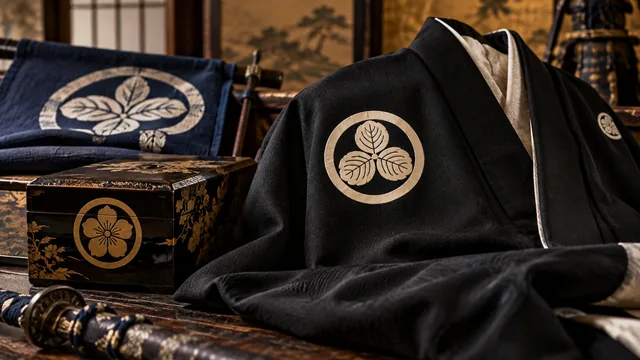
They are drawn from common kamon designs such as wisteria, paulownia, hawk feathers and three swirling commas. They are suggestions for fictional houses only. Historical clans do not get a random crest, because each real family had its own.
More tools
Fill your clan with people: lords, retainers and the warriors who left.
The main tool: twelve styles from classic samurai to gamer tags, with kanji, meanings and a personal name option.
Masterless samurai with Edo-style common names and optional creative epithets for seven story paths.
Pick a role, from samurai and daimyo to warrior monk and foot soldier, and get a name that fits it.
Onna-musha, noble ladies and women warriors, with honorifics such as Gozen and hime explained.
Keep reading
Minamoto, Taira, Hojo, Takeda, Tokugawa: what the great samurai clan names mean, where they came from, and why uji and myoji are not the same thing.
What kamon are, how Japanese family crests are designed, the emblems of famous samurai clans, and how to match a crest to a clan name.
Mountains, rice fields, rivers and bridges: how Japanese surnames were built from the land, why the Meiji laws matter, and which names carry real warrior history.