Famous Samurai Names and the Stories Behind Them
Seven famous samurai names, from Minamoto no Yoshitsune to Saigo Takamori, and the surprising stories of how each warrior came to be known by them.
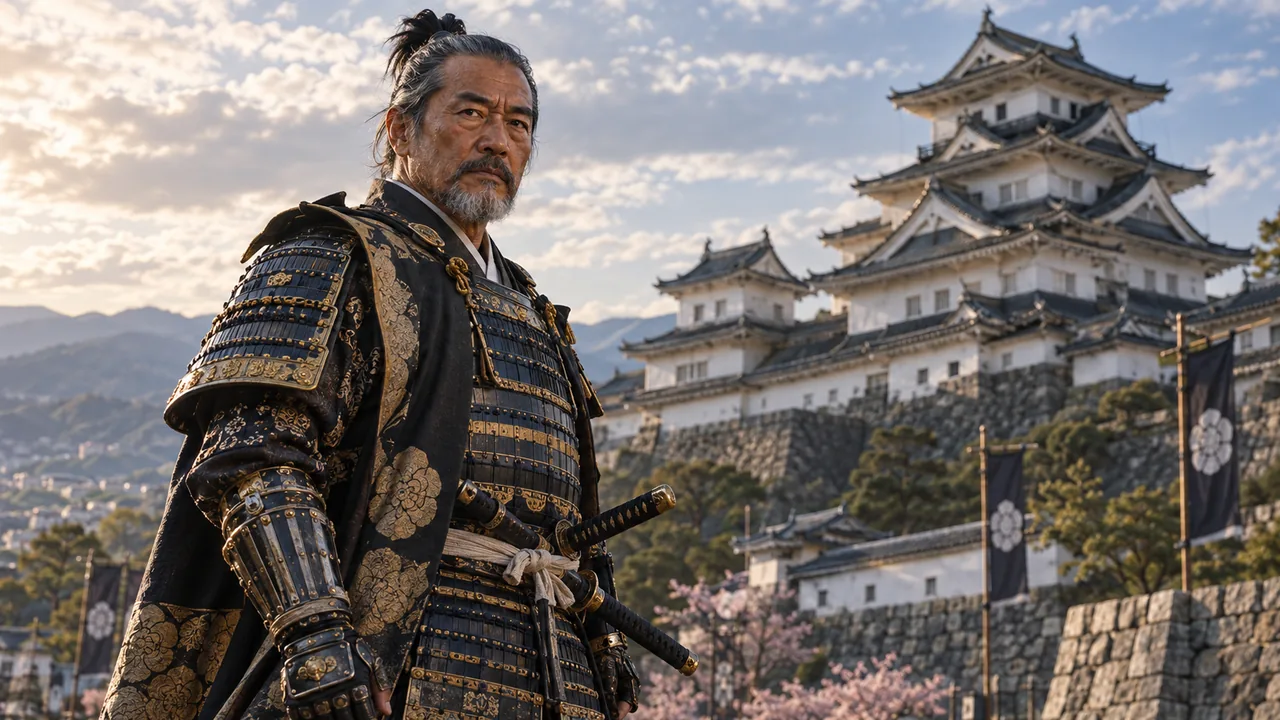
The most famous samurai names are more than labels. Minamoto no Yoshitsune, Toyotomi Hideyoshi, Miyamoto Musashi and the others below each carry a story about how the name was earned, granted, changed or even mistaken. Here are seven of them, with the kanji, what the characters mean, and the history that made each name stick.
A quick note before we start: Japanese names are written surname first, so in Toyotomi Hideyoshi the family name is Toyotomi and the personal name is Hideyoshi. We keep that order throughout, as historians do.
Minamoto no Yoshitsune: The Boy Called Ushiwakamaru
Few names in Japanese history carry as much emotion as 源義経, Minamoto no Yoshitsune (1159–1189). As a child he was known as Ushiwakamaru (牛若丸), a childhood name built from the characters for "ox," "young" and the affectionate suffix maru. After his father's defeat he was sent to Kurama temple north of Kyoto, where he was also called Shanao. Legend says he learned swordsmanship from a mountain goblin there, and that he met the giant warrior monk Benkei in a duel on Kyoto's Gojo Bridge.
As an adult general he won the decisive victories of the Genpei War for his half brother Minamoto no Yoritomo, ending with the destruction of the Taira at Dan-no-ura in 1185. Yoritomo then turned against him, and Yoshitsune died at Koromogawa in the far north in 1189.
His name lives on in an unexpected word. Yoshitsune held the court post of hogan (判官), and the Japanese expression hogan-biiki, "favoring the hogan," means sympathy for the underdog. A title became a nickname, and the nickname became part of the language.
Kusunoki Masashige: A Name Written With a Tree
楠木正成, Kusunoki Masashige, fought for Emperor Go-Daigo in the 1330s and died at the Battle of Minatogawa in 1336 against the forces of Ashikaga Takauji. He became the model of loyalty to the throne, and later generations honored him as Dai-Nanko, "the great Lord Kusunoki." His bronze equestrian statue still stands in the plaza outside the Imperial Palace in Tokyo.
The surname is written with the characters for "camphor tree" (楠) and "tree" (木). The given name combines 正 (correct, upright) and 成 (to become, accomplish). Keep those two characters in mind, because they come back later in this list with a different reading.
Toyotomi Hideyoshi: Three Surnames in One Life
No famous samurai shows better than Hideyoshi how names tracked social rank. He rose from humble origins in Owari province to rule all of Japan, and his names rose with him.
- Kinoshita Tokichiro (木下藤吉郎): the name he used as a rising retainer of Oda Nobunaga. Tokichiro is a common name of the -ro type, not a formal personal name.
- Hashiba Hideyoshi (羽柴秀吉): a new surname he adopted in the early 1570s. It is traditionally explained as combining one character each from two senior Oda generals, Niwa (丹羽) and Shibata (柴田).
- Toyotomi Hideyoshi (豊臣秀吉): a brand new clan name granted by the imperial court in 1586, written with characters for "abundant" and "minister."
In his last years he was also called Taiko (太閤), the title for a regent who has passed the office of kampaku to a successor. Many Japanese people still refer to him simply as Taiko-san. If you are curious how these layers of personal names worked in general, our guide to how samurai names actually worked walks through childhood names, adult names and common names step by step.
Miyamoto Musashi: A Swordsman Named After a Province
宮本武蔵, Miyamoto Musashi (around 1584–1645), is probably the most famous swordsman in Japanese history. He fought Sasaki Kojiro on the island of Ganryujima in a duel traditionally dated to 1612, founded the two-sword school later known as Niten Ichi-ryu, and near the end of his life wrote The Book of Five Rings (五輪書, Go Rin no Sho).
His name is a small lesson in itself. Musashi (武蔵) is also the name of an old province that covered much of present day Tokyo, and in The Book of Five Rings he introduces himself with a much longer formal name, Shinmen Musashi no Kami Fujiwara no Genshin. That one line holds a family name (Shinmen), a provincial title (Musashi no Kami), an ancient clan name (Fujiwara) and a formal personal name (Genshin).
The same characters can be read another way, Takezo, and Yoshikawa Eiji's popular novel Musashi uses that reading for the hero as a wild young man. For more on how one set of characters can carry several readings, see our guide to reading kanji in samurai names.
Sanada Yukimura: The Name He Probably Never Used
Ask a Japanese fan of the Sengoku period about the bravest defender of Osaka Castle and you will hear the name Sanada Yukimura (真田幸村). Yet in reliable documents from his own lifetime, he appears as Sanada Nobushige (真田信繁). The name Yukimura comes from later accounts and war tales, and it spread through Edo period storytelling until it became the name everyone knows.
His fame rests on the Osaka campaigns of 1614 and 1615. In the winter campaign he built an earthwork fort called the Sanada-maru (真田丸) that inflicted heavy losses on the Tokugawa attackers, and he died fighting in the summer campaign of 1615. Popular books in the early twentieth century surrounded him with the fictional "Sanada Ten Braves," including the ninja Sarutobi Sasuke.
Tip: Sanada Yukimura is a good reminder that the "famous" version of a name is not always the historical one. If you are writing fiction, decide early whether you are following the legend or the documents, and stay consistent.
Hattori Hanzo: A Name Passed Down
Hattori Hanzo (服部半蔵) is famous worldwide as a "ninja," but the best known Hanzo was a samurai commander in the service of Tokugawa Ieyasu, whose family came from Iga province. His personal name was Masanari, written 正成. Those are exactly the same characters as Kusunoki Masashige's given name, read a different way. Name characters often have several possible readings, and only the family's choice tells you which is right.
"Hanzo" itself was a common name used by successive heads of the family, not a one-time personal name. In 1582, after Oda Nobunaga's death at Honno-ji, Masanari helped guide Ieyasu on a dangerous escape through the Iga mountains back to his home province. His name survives in Tokyo today: the Hanzomon gate of the old Edo Castle and the Hanzomon subway line are both named after him.
Saigo Takamori: A Famous Name by Mistake
西郷隆盛, Saigo Takamori (1828–1877), was a Satsuma samurai who helped bring down the Tokugawa shogunate and then led the failed Satsuma Rebellion against the new Meiji government, dying at Shiroyama in 1877. He is often called "the last samurai."
For most of his life he went by the common name Kichinosuke (吉之助). The usual account of his famous formal name is surprising: his formal personal name was Takanaga (隆永), but when he was to be honored with court rank after the Meiji Restoration, a friend submitted the paperwork with "Takamori," which had actually been his father's name. Saigo accepted it, and Takamori is the name history remembers.
Borrowing From the Famous Names
Here is a quick summary of the seven names above and what each one teaches about how samurai names were made, changed and remembered.
Seven famous samurai names at a glance
| Name | Kanji | What the name story shows |
|---|---|---|
| Minamoto no Yoshitsune | 源義経 | Childhood names and titles turned into nicknames |
| Kusunoki Masashige | 楠木正成 | Surnames drawn from nature |
| Toyotomi Hideyoshi | 豊臣秀吉 | New surnames marking a rise in rank |
| Miyamoto Musashi | 宮本武蔵 | Provincial titles and long formal names |
| Sanada Nobushige (Yukimura) | 真田信繁 | Legend replacing the documented name |
| Hattori Hanzo Masanari | 服部正成 | Hereditary common names; one set of kanji, two readings |
| Saigo Takamori | 西郷隆盛 | A formal name fixed by a paperwork mistake |
Patterns worth borrowing
Reading these stories side by side, a few patterns stand out that are useful if you want a name with the same feel:
- Two parts, surname first. A family name of one or two characters, then a two-character personal name.
- Meaningful characters. Upright (正), prosperity (隆), excellence (秀) and similar positive characters appear again and again in warrior names.
- A second, everyday name. Tokichiro, Kichinosuke and Hanzo show how samurai were often known by a common name in daily life.
- A story attached. The names became famous because something happened to the people who carried them.
If you would rather not borrow a real warrior's identity, our samurai name generator builds original names from the same ingredients, with kanji and meanings shown for each result. For the families behind these surnames, our article on samurai clan names is the natural next read, and you can browse more history on the Samurai Names blog.
Frequently Asked Questions
Who is the most famous samurai?
There is no single answer, but Miyamoto Musashi, Minamoto no Yoshitsune and Oda Nobunaga are among the most widely known inside and outside Japan. Musashi is famous as a swordsman and author, Yoshitsune as a tragic young general, and Nobunaga as the warlord who began Japan's reunification.
Why do some famous samurai have more than one name?
Samurai routinely changed names at coming of age, on promotion, when a lord granted them a character, or when they took Buddhist vows. Later storytellers also attached popular names, such as Sanada Yukimura, that the person may never have used. That is why one warrior can appear under several names in different sources.
Can I use a famous samurai's name for my character?
You can, but readers will instantly connect it to the real person. For an original character it usually works better to borrow the structure of a famous name, a clan-style surname plus a two-character given name, rather than the name itself. A samurai name generator is a quick way to explore those patterns.

Written by the Samurai Names Editorial Team
We research samurai history, Japanese names and kanji, and check every name against standard dictionaries. Read our editorial policy or contact us with corrections.