Samurai Name Kanji: How to Read the Characters in Warrior Names
Why 信 reads Nobu in a samurai name, how lords granted characters to vassals, and how families passed one kanji down the generations, with real examples.
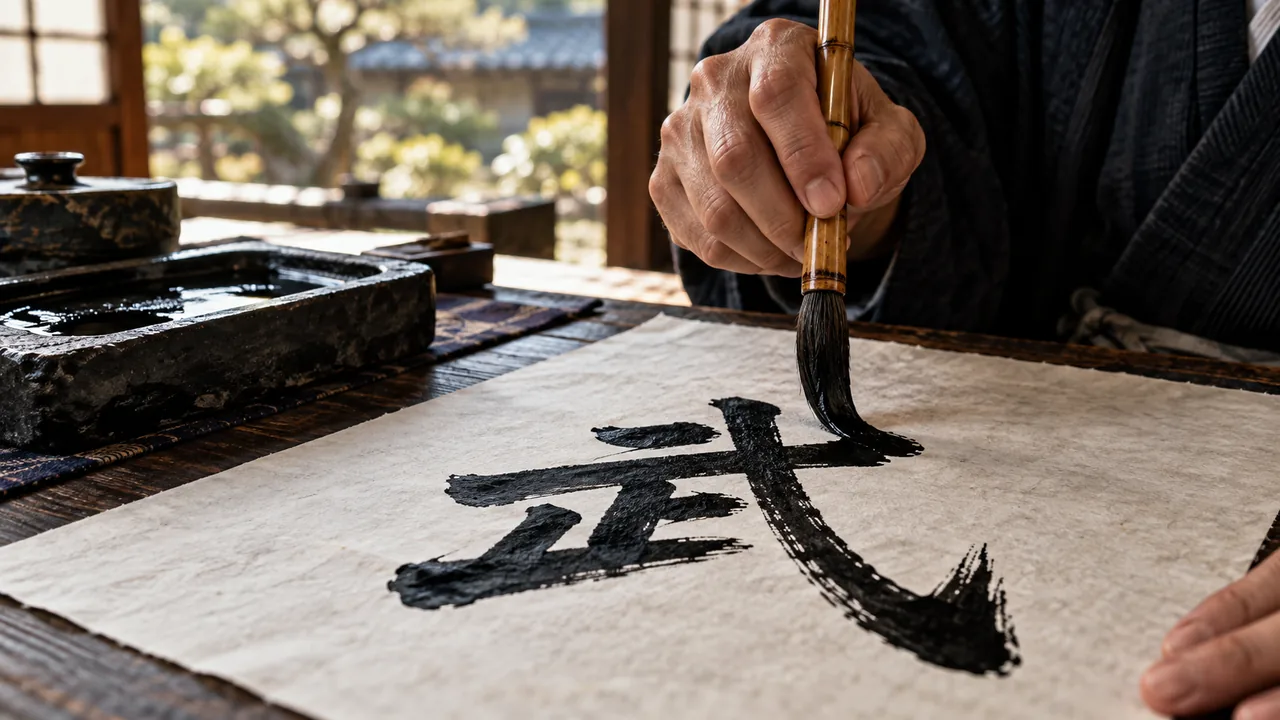
Samurai name kanji often do not read the way they do in everyday Japanese. The character 信 is usually shin, but in Oda Nobunaga it is nobu. This guide explains the three kinds of readings you will meet in samurai names, why some characters were gifts from a lord, and how families threaded one kanji through generations of names.
On and Kun: The Two Basic Readings
Most kanji have at least two kinds of reading:
- On'yomi, the "sound reading," based on how the character was pronounced in Chinese when it was borrowed. 山 (mountain) is san, as in Fujisan.
- Kun'yomi, the "meaning reading," a native Japanese word attached to the character. The same 山 is yama.
Samurai surnames lean heavily on kun readings, because so many come from landscape features: 山田 Yamada, "mountain rice field," or 松本 Matsumoto, "base of the pine." Read character by character with native words, they are usually straightforward.
Sound changes in surnames
One small complication: when two characters join, the second one often changes its first sound from unvoiced to voiced. This is called rendaku. 田 is ta on its own, but da in Yamada. 島, island, is shima, but becomes jima in many surnames. Rendaku is not fully predictable, and the same characters can go either way: 中島 is read Nakajima by some families and Nakashima by others. Each family's reading is simply part of its name.
Personal names are where things get interesting, because they add a third category.
Nanori: Readings Used in Names
Nanori (名乗り) are readings used mainly or only in personal names. Many of the most common characters in samurai given names are read with nanori that you would rarely hear in ordinary words. The table below shows characters that appear again and again in warrior names.
| Kanji | Core meaning | Common on reading | Name reading | Example |
|---|---|---|---|---|
| 信 | trust, faith | shin | nobu | Nobunaga 信長 |
| 義 | righteousness | gi | yoshi | Yoshitsune 義経 |
| 秀 | excel | shu | hide | Hideyoshi 秀吉 |
| 康 | peace, ease | ko | yasu | Ieyasu 家康 |
| 政 | government | sei | masa | Masamune 政宗 |
| 宗 | origin, main line | shu, so | mune | Tokimune 時宗 |
| 忠 | loyalty | chu | tada | Tadakatsu 忠勝 |
| 景 | scenery, view | kei | kage | Kagekatsu 景勝 |
| 頼 | rely on | rai | yori | Yoritomo 頼朝 |
| 輝 | shine | ki | teru | Terumoto 輝元 |
Some of these name readings come from native words connected to the character's meaning, and some have histories that are hard to trace. Either way, they are well established, and a name built from them will look natural to Japanese readers. For a larger list of given names with meanings, see our guide to Japanese samurai names with meanings.
One spelling, more than one reading
Because a family chose the reading, the same pair of characters can be read differently in different names. 正成 is Masashige for Kusunoki Masashige but Masanari for Hattori Hanzo's personal name. Our article on famous samurai names tells both stories.
There was also a tradition of reading the names of respected figures with on readings. The poet Fujiwara no Sadaie (藤原定家) is far better known as Teika, and the Tokugawa shogun Yoshinobu (慶喜) has long been referred to as "Keiki-san." The medieval tale of Minamoto no Yoshitsune is titled Gikeiki (義経記), using the on reading of his name.
Surnames That Break the Rules
Some famous samurai surnames cannot be read from their characters at all. You simply have to know them.
- 伊達 Date: the family of Date Masamune. Neither character is normally read this way.
- 服部 Hattori: generally traced to an old occupational group of weavers, the hatoribe.
- 長宗我部 Chosokabe: the lords of Tosa, a four-character surname with a reading that surprises even many Japanese readers.
The lesson for anyone building a name: if you invent a surname, stick to characters and readings that a reader could work out. Irregular readings are charming in real history but look like mistakes in a made-up name. Our article on common samurai name mistakes covers more pitfalls like this.
Henki: Characters Granted by a Lord
One of the most distinctive customs in samurai naming was henki (偏諱), also described as ichiji hairyo (一字拝領), "humbly receiving one character." A lord, often the shogun or a powerful daimyo, granted one character from his own name to a vassal or ally, usually when the young man came of age. Carrying that character was an honor and a public statement of loyalty.
The grant was often tied to the coming of age ceremony, genpuku. The senior figure who sponsored the ceremony and placed the adult's cap on the young man's head, called the eboshi-oya (烏帽子親), "cap parent," was a natural person to give a character. A family that could secure a powerful eboshi-oya for its heir gained a lasting connection, written permanently into the heir's name.
| Recipient | Name received | Granted character | Granted by |
|---|---|---|---|
| Takeda Shingen (as a young man) | Harunobu 晴信 | 晴 | Shogun Ashikaga Yoshiharu 義晴 |
| Uesugi Kenshin (mid career) | Terutora 輝虎 | 輝 | Shogun Ashikaga Yoshiteru 義輝 |
| Mori Terumoto | Terumoto 輝元 | 輝 | Shogun Ashikaga Yoshiteru 義輝 |
| Tokugawa Hidetada | Hidetada 秀忠 | 秀 | Toyotomi Hideyoshi 秀吉 |
| Date Tadamune | Tadamune 忠宗 | 忠 | Shogun Tokugawa Hidetada 秀忠 |
Notice which character the Ashikaga shoguns gave away. They kept 義, the family's own signature character, and usually granted the other one. Receiving the family character itself was a rarer and greater honor. Shingen's eldest son, for example, became Takeda Yoshinobu (義信) with the 義 of Ashikaga Yoshiteru.
Toorimoji: A Family's Shared Character
The character the Ashikaga guarded so carefully is an example of a toorimoji (通字), a character passed down through a family's personal names. It worked like a family signature inside the given name.
- Tokugawa: 家, as in Ieyasu, Iemitsu and Ietsuna. Most Tokugawa shoguns carried it; Hidetada, with his granted character, is a notable exception.
- Hojo regents: 時, as in Tokimasa, Yoshitoki, Yasutoki, Tokiyori and Tokimune.
- Taira: 盛, as in Kiyomori, Shigemori, Munemori and Tomomori.
- Oda: 信, as in Nobuhide, Nobunaga and Nobutada.
- Mori: 元, as in Motonari, Takamoto and Terumoto.
Put henki and toorimoji together and a single name can tell a political story. Mori Terumoto's 輝元 pairs the shogun's granted character with his own family's character: a two-character summary of who he served and where he came from. His father Takamoto (隆元) followed the same pattern, with 隆 from the regional lord Ouchi Yoshitaka.
Tip: If you are naming a family of characters, give them a toorimoji. A father, son and grandson who all share one character instantly feel like a real house, and a son who lacks it raises questions your story can answer.
Reading a Samurai Name Step by Step
When you meet an unfamiliar samurai name in kanji, work through it like this:
- Split surname and given name. The surname comes first and is usually one or two characters.
- Read the surname with kun readings first. Most landscape surnames will fall into place. Watch for famous irregular ones like Date.
- Read the given name with nanori. Check name readings before ordinary readings for characters like 信, 義 and 秀.
- Look for a shared character. Does a character match the family's toorimoji or the name of the person's lord?
- Confirm the reading in a reliable source. For real historical people, the accepted reading is a matter of record, not guesswork.
Choosing Kanji for Your Own Name
For an original samurai name, aim for characters with clear, positive meanings and standard name readings. Two-character given names built from the table above, such as a loyalty character with a strength character, will read naturally. Avoid characters with grim meanings unless you have a deliberate reason, and avoid rare characters that only a dictionary could read.
Characters to handle with care
A few kinds of characters cause trouble in invented names:
- Grim meanings. Characters such as 死 (death) or 殺 (kill) look dramatic to English speakers but were not used in real given names, because a name was meant to carry good fortune.
- Look-alike characters. 龍 and 竜 are two forms of "dragon," both legitimate, but mixing forms within one family of names looks careless.
- Readings without a source. If you cannot find a reading in a name dictionary, assume Japanese readers will not recognize it either.
Our samurai name generator shows the kanji, the meaning of each character and a syllable by syllable pronunciation for every result, which makes it a practical way to see these readings in action. For the bigger picture of when samurai received and changed names, read how samurai names worked.
Frequently Asked Questions
Why are Japanese name kanji read differently from normal words?
Many kanji have special readings called nanori that are used mainly in personal names. For example, 信 is usually read shin in words but nobu in names like Nobunaga. Because a family chose the reading, the same characters can sometimes be read more than one way.
What is henki in samurai names?
Henki was the custom of a lord granting one character from his own name to a vassal, often at the vassal's coming of age ceremony. Takeda Shingen's earlier name Harunobu, for instance, used 晴 from the shogun Ashikaga Yoshiharu. It was a mark of favor and a public sign of the relationship.
What is a toorimoji?
A toorimoji is a character that a family reused in personal names across generations. Most Tokugawa shoguns had 家 in their names, and many Hojo regents had 時. Seeing the shared character tells you at a glance which family a name belongs to.
Written by the Samurai Names Editorial Team
We research samurai history, Japanese names and kanji, and check every name against standard dictionaries. Read our editorial policy or contact us with corrections.