Samurai Names for Dogs and Cats, From Shiba Inu to Hachiko
Warrior-inspired names for dogs and cats with kanji and meanings, the Japanese breeds behind them, and the real story of Hachiko the Akita.
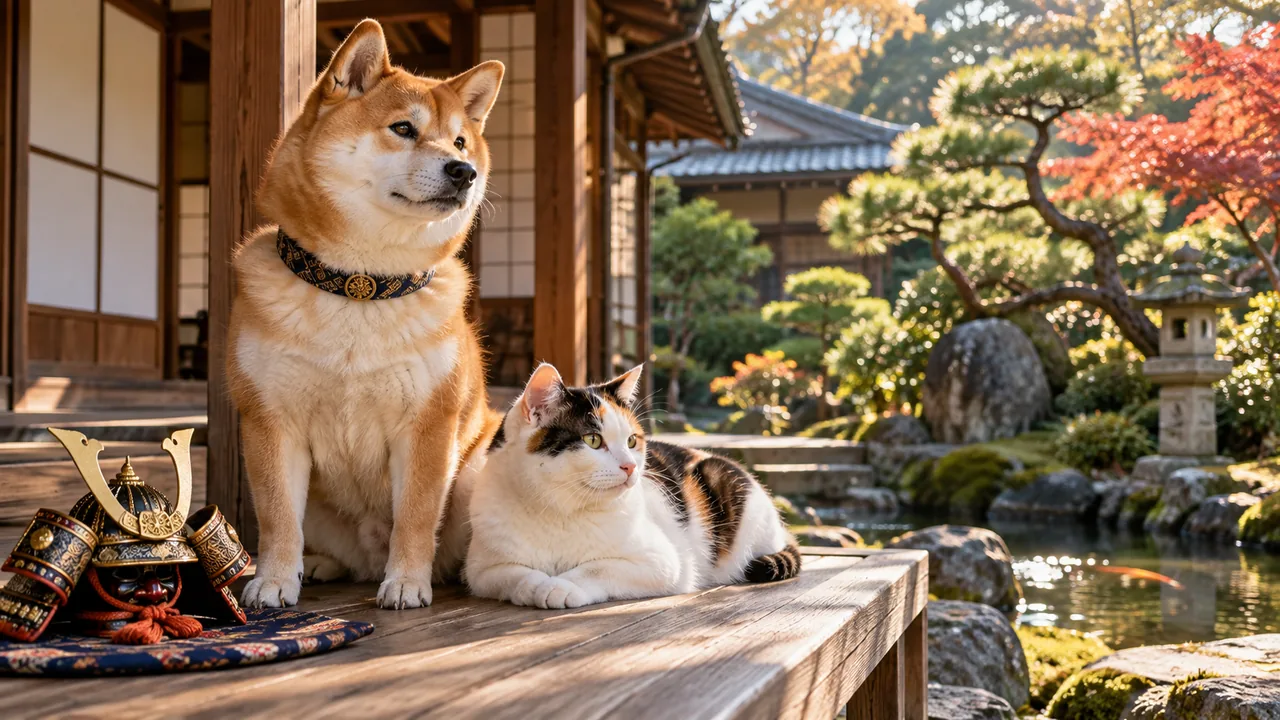
Samurai names suit dogs and cats surprisingly well: many are short, end in a clear vowel and carry a strong meaning, from Kuma (bear) to Tomoe (a swirling crest and a famous woman warrior). Below you will find names for dogs and cats with their kanji and meanings, a quick look at Japan's native dog breeds, the accurate story of Hachiko, and practical tips for choosing a name your pet will actually respond to.
What Makes a Good Pet Name
Animals respond to sounds, not to meanings, so a pet name needs to work in the ear first. Trainers commonly suggest a name of one or two syllables that ends in a vowel sound, because it carries well when you call across a park. Japanese words are almost made for this: nearly every syllable ends in a vowel, and many native words are two syllables long.
A few other checks are worth doing before you commit:
- Distinct from commands. A name that rhymes with "sit," "stay" or "no" can confuse a dog in training.
- Easy for everyone at home. Children and visitors should be able to say it without coaching.
- Comfortable in public. You will shout this name at the vet's office and in the street, so pick one you are happy to say aloud.
Japan's Native Dog Breeds
If your dog is a Japanese breed, a Japanese name is a natural match. Japan recognizes six native breeds, sometimes grouped together as Nihon-ken: the Akita, Kai Ken, Kishu, Shikoku, Hokkaido and Shiba. All six have been designated national natural monuments.
Shiba Inu
The smallest of the six, the Shiba (柴犬) is known for its fox-like face and independent streak. The origin of the name is debated: one explanation connects it to 柴, brushwood, and another to an old word for "small." Inu simply means dog. Common Shiba coat colors include red, black and tan, and sesame.
Akita
The Akita (秋田) is named after Akita Prefecture in northern Honshu. Large, dignified and loyal, it is the breed of Japan's most famous dog.
Kai Ken
The Kai Ken (甲斐犬) comes from the mountains of the old province of Kai, today Yamanashi Prefecture. Kai was the home province of the Takeda clan, which makes the breed an especially fitting match for a samurai name. Kai Ken usually have a brindle coat.
The True Story of Hachiko
Hachiko was an Akita born in 1923 in Odate, Akita Prefecture. He belonged to Ueno Hidesaburo, a professor in the agricultural department of Tokyo Imperial University, and is remembered for meeting him at Shibuya Station at the end of the day.
In May 1925, Professor Ueno died suddenly. Hachiko kept returning to Shibuya Station day after day for close to ten years, until his own death in March 1935. His loyalty became widely known through newspaper coverage, and a bronze statue of him was unveiled at the station in 1934, while he was still alive. That statue was melted down for metal during World War II, and a replacement was put up in 1948. It remains one of the best known meeting points in Tokyo, and Hachiko's preserved body is displayed at the National Museum of Nature and Science in Tokyo.
His name was Hachi (ハチ), meaning eight. The ending ko (公) is a character meaning "lord" or "duke," added as a mark of affection and respect. Naming a dog Hachi is a lovely tribute, and it already passes the two-syllable test.
Tip: Another true story gives two more classic names. When a Japanese Antarctic expedition had to leave its sled dogs behind in 1958, two of them, Taro and Jiro, were found alive when the next team arrived in 1959. Taro and Jiro are traditional names for a first and second son, which makes them a perfect pair for two dogs.
Samurai Names for Dogs
These names draw on warriors, creatures and qualities associated with the samurai. Each kanji is given with its standard meaning.
| Name | Kanji | Meaning | Suits |
|---|---|---|---|
| Kuma | 熊 | bear | big, fluffy dogs |
| Tora | 虎 | tiger | brindle or bold dogs |
| Kage | 影 | shadow | dogs that follow you everywhere |
| Tetsu | 鉄 | iron | sturdy, tireless dogs |
| Goma | 胡麻 | sesame | sesame-coated Shiba |
| Aka | 赤 | red | red-coated dogs |
| Musashi | 武蔵 | an old province name, borne by the swordsman Miyamoto Musashi | confident dogs |
| Benkei | 弁慶 | the giant warrior monk who served Minamoto no Yoshitsune | large, protective dogs |
| Hachi | 八 | eight; a tribute to Hachiko | loyal dogs, especially Akitas |
Benkei is a particularly good fit for a guardian breed. In legend he stood on a bridge and defeated swordsman after swordsman until the young Yoshitsune bested him, after which Benkei served him loyally to the end. You can read about more warriors behind famous names in our post on famous samurai names.
Samurai Names for Cats
Cats have their own place in samurai lore. The beckoning cat figurine, maneki-neko (招き猫), has several origin stories. One of the best known is set at Gotokuji temple in Tokyo, where a cat is said to have beckoned Ii Naotaka, lord of Hikone, inside just before a storm broke, after which he became the temple's patron. It is a legend rather than documented history, but it is a charming one.
| Name | Kanji | Meaning | Suits |
|---|---|---|---|
| Tomoe | 巴 | a swirling comma crest; also Tomoe Gozen, a famous woman warrior | fearless cats |
| Hime | 姫 | princess | cats who expect to be served |
| Kiku | 菊 | chrysanthemum | elegant cats |
| Ume | 梅 | plum blossom | small, sweet cats |
| Kuro | 黒 | black | black cats |
| Shiro | 白 | white | white cats |
| Yuki | 雪 | snow | white or pale cats |
| Kiri | 霧 | mist | gray, quiet cats |
Shiro has a bonus pun. Written 白 it means white, while the same sound written 城 means castle, so a white cat named Shiro is also, in a sense, a castle cat. And if you want the most traditional cat name of all, Japan's classic choice is Tama. For more women warriors behind names like Tomoe, see our guide to female samurai names.
Famous Warrior Names for Big Personalities
Some pets clearly run the household, and a famous name can be a fun way to say so. A bossy cat who conquers every room might be a Nobunaga. A patient dog who waits for treats with endless calm could be an Ieyasu, after the warlord who outlasted all his rivals. A one-eyed rescue cat might proudly carry the name Masamune, after Date Masamune, the "One-Eyed Dragon." These are longer names, but most families shorten them naturally: Nobu, Yasu, Mune.
Keep the tone affectionate. These were real people, and a playful tribute works best when it reflects something admirable, such as courage, patience or loyalty.
Saying the Names Correctly
Japanese pronunciation is friendlier than it looks, and a few simple rules will make these names sound right.
- Vowels are short and pure. A is as in "father," i as in "machine," u as in "flute," e as in "pet" and o as in "go," without the glide English often adds.
- Every vowel is spoken. Kage is "kah-geh," not "cage," and Ume is "oo-meh," not "yoom."
- Stress stays even. Japanese does not punch one syllable the way English does, so Musashi is closer to "moo-sah-shee" with equal weight on each part.
- The r is a light tap. It sits somewhere between an English r, l and d, so Kuro sounds a little like "koo-doh" said quickly.
Your pet will not mind if your accent is not perfect, of course. But getting close to the real pronunciation keeps the name connected to its meaning, which is half the pleasure of choosing a Japanese name in the first place.
Choosing Your Pet's Name
Try the shortlist out loud for a day or two. Call each name from across the room and see which one gets an ear twitch. Check that everyone in the house can say it, and that it does not sound like a command you plan to teach.
If you want more ideas, browse our list of cool samurai names, or open the samurai name generator and set the count to a larger batch. Each result shows the kanji and meaning, so you can choose a name that sounds right and means something you like, then shorten it to a pet-friendly nickname if needed.
Frequently Asked Questions
What does Hachiko mean?
The dog's name was Hachi, which means eight. The ending ko comes from a character meaning lord or duke and was added as an affectionate, respectful touch, so Hachiko is roughly like saying Mr. Hachi.
What is a good samurai name for a Shiba Inu?
Short names work best for an alert, quick breed like the Shiba. Kage (shadow), Tora (tiger), Goma (sesame, also a Shiba coat color) and Musashi are all easy to call and carry a samurai flavor.
What is a traditional Japanese cat name?
Tama is the classic Japanese cat name, comparable to Whiskers or Kitty in English. For a samurai touch, names such as Tomoe, Hime, Kuro or Shiro are easy to say and have clear meanings.

Written by the Samurai Names Editorial Team
We research samurai history, Japanese names and kanji, and check every name against standard dictionaries. Read our editorial policy or contact us with corrections.